Last Updated on September 19, 2026
Bird droppings should be softened with water before they are removed from glass. For an accessible window, wet the deposit with warm water and a small amount of mild dish soap, give it several minutes to soften, then lift the residue with a clean microfibre cloth or a glass-safe plastic scraper. Rinse the glass and finish with a squeegee.
The biggest mistake is trying to scrape hardened bird droppings from a dry window. Dried deposits can contain grit and other particles that may drag across the pane and leave fine scratches.
Exterior high-rise windows are a different situation. A condo resident, office employee or building occupant should never lean outside a window, climb onto a balcony railing or improvise an exterior access method to reach the glass.
At Northern Touch Property Care, we clean high-rise windows across Toronto using access methods suited to the building, glass and location of the contamination.
The Safest Way to Remove Bird Droppings From Glass
The basic cleaning sequence is:
- Wet the bird droppings thoroughly.
- Allow the deposit to soften.
- Lift the material instead of aggressively scrubbing it.
- Wash the surrounding glass.
- Rinse away loosened residue.
- Squeegee the window for a streak-free finish.
The exact method changes when the window has coatings, tinting or difficult exterior access.
Quick Guide
| Situation | Recommended approach |
|---|---|
| Fresh bird droppings | Wet and gently lift with a damp microfibre cloth |
| Dried bird droppings | Pre-soak before attempting removal |
| Thick deposits | Repeat the soaking process rather than forcing them off |
| Tinted or coated glass | Check the glass or coating manufacturer’s cleaning requirements |
| Exterior condo window | Contact building management or a professional window cleaner |
| High-rise exterior glass | Use a qualified high-rise window cleaning contractor |
| Residue remains after cleaning | Determine whether the remaining mark is staining, mineral buildup or glass damage |
Why Dried Bird Droppings Are Harder to Remove From Windows
Fresh bird waste contains moisture. Once exposed to sunlight, wind and changing temperatures, it loses that moisture and bonds more firmly to the window.
Toronto high-rise glass receives considerable sun and wind exposure, particularly on open elevations. A deposit that was soft when it first landed can become a hard crust on the pane.
Bird droppings may also contain tiny particles from food, soil and other material the bird has consumed.
This is why we prefer rehydration before agitation.
More force does not necessarily produce a cleaner pane. Giving the deposit enough moisture to release from the glass usually makes removal safer and easier.
How to Clean Bird Poop Off an Accessible Window
This method is suitable only when the entire window can be reached from a normal, secure position.
1. Check That You Can Reach the Window Safely
Before cleaning anything, determine where the contamination is located.
Interior glass, patio doors and safely accessible balcony glass may be manageable.
An exterior pane several storeys above the ground requires a completely different approach.
Never reach outside an upper-storey window or stand on furniture, railings, window frames or improvised platforms to reach bird droppings.
2. Wear Gloves
Bird waste should be handled as biological material.
Wear disposable or washable gloves and avoid unnecessary direct contact with the droppings.
Heavy accumulations around nesting or roosting areas require more care than an isolated spot on a window.
3. Wet the Droppings
Mix warm water with a small amount of mild dish soap or use a glass-safe cleaning solution.
Apply enough solution to saturate the deposit.
For a dried patch, place a wet cloth against the area for several minutes.
The goal is to soften the deposit throughout rather than wetting only its surface.
4. Gently Lift the Deposit
Once soft, use a clean microfibre cloth to lift the material.
A plastic scraper designed for delicate surfaces can help with a stubborn deposit on suitable glass.
Keep the surface wet while working.
If the material still resists, soak it again.
5. Wash the Entire Pane
Removing only the visible bird dropping can leave a noticeable clean spot surrounded by dust and atmospheric grime.
Wash the surrounding pane after the deposit has been removed.
On exterior windows, this often includes:
- airborne dust
- pollen
- traffic film
- insect residue
- mineral deposits
- rain marks
Cleaning the full pane produces a more uniform finish.
6. Rinse and Squeegee the Glass
Rinse away loosened contamination and cleaning residue.
Use a clean squeegee to remove the water from the glass. Wipe the rubber blade between passes so debris is not transferred back onto the window.
Finish the edges with a clean lint-free microfibre cloth.
What Should You Use to Remove Bird Droppings From Windows?
For routine contamination, complicated chemicals are usually unnecessary.
Useful supplies include:
- warm water
- mild dish soap
- glass-safe window cleaning solution
- clean microfibre applicator
- soft sponge
- squeegee
- plastic scraper suitable for glass
- gloves
- clean rinse water
Professional high-rise window cleaners may use different equipment and cleaning agents depending on the glass, facade, access system and severity of the buildup.
At Northern Touch, we also consider whether the window is standard plate glass, tinted glass, coated glass, decorative glass or part of a specialized glazing system before choosing the cleaning method.
What Should You Avoid Using on Bird Droppings?
Some removal techniques can create a larger problem than the original stain.
Scraping the Glass While It Is Dry
This can drag hardened particles across the pane.
Soften the contamination first.
Aggressive Abrasive Pads
A scrubber that feels harmless in your hand can leave visible scratching under sunlight.
Use products intended for the type of glass you are cleaning.
Household Razor Blades Without Checking the Glass
Professional glass cleaners sometimes use specialized scraping techniques in specific situations, but a razor should not automatically be used on every window.
Certain coated, tinted or treated glass products have specific cleaning restrictions.
Strong Chemicals
Bird droppings rarely require an aggressive chemical treatment.
Strong acidic or alkaline cleaners may affect surrounding seals, coatings, frames, stonework or other facade materials.
Start with the mildest effective cleaning method.
Pressure Washing the Window at Close Range
High pressure is generally unnecessary for an isolated bird dropping and can introduce additional risks around glazing systems, window seals and neighbouring facade materials.
What If a Mark Remains After the Bird Dropping Is Gone?
This is an important distinction.
A mark remaining on the glass does not always mean bird poop is still present.
After the organic material has been removed, you may be looking at:
- mineral deposits
- hard-water staining
- a fine scratch
- residue on the surface
- deterioration of a coating
- another type of exterior contamination
Running a scraper repeatedly over the area will not solve every one of these conditions.
The glass should be inspected before moving to a more aggressive restoration method.
This is especially important on expensive high-rise glazing where replacing a damaged pane can cost considerably more than cleaning it correctly.
Can Bird Droppings Scratch Windows?
The droppings themselves are only part of the issue.
Once dried, material trapped within the deposit can behave like an abrasive if it is dragged across the glass.
That is why our cleaning process focuses on softening contamination before applying mechanical pressure.
A similar principle applies to other stubborn window contaminants such as construction debris and certain deposits found on neglected exterior glass.
Can You Use Vinegar to Clean Bird Poop Off Windows?
Diluted white vinegar is commonly recommended for household glass cleaning, but it is not necessary for most bird-dropping removal.
Warm water with a small amount of mild detergent will often soften the deposit sufficiently.
You also need to consider everything surrounding the glass. A cleaning solution may contact window frames, sealants, natural stone, metal finishes or specialized coatings.
For commercial and high-rise glazing, we prefer selecting a cleaner according to the complete window system rather than relying on a universal household recipe.
Can Rain Remove Bird Droppings From Windows?
Rain may soften a fresh deposit, but it rarely performs the entire cleaning process.
Older droppings can remain attached through multiple rainstorms.
Rainwater may also leave additional spotting as it evaporates.
A window with dried bird deposits generally requires mechanical cleaning after the contamination has been softened.
Why High-Rise Bird Dropping Removal Is Different
Removing one spot from a patio door is a cleaning task.
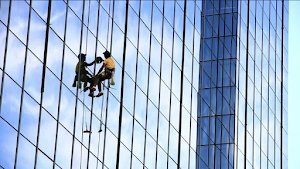
Removing bird contamination from the exterior of a 20-storey building is also an access and fall-protection operation.
Ontario’s Window Cleaning Regulation applies to employers, window cleaning workers and building owners in situations where a worker performing window cleaning may fall three metres or more.
Professional crews may use equipment such as:
- rope access systems
- suspended access equipment
- swing stages
- aerial lifts
- appropriate fall-protection systems
The access method depends on the building.
Northern Touch uses professional high-rise access equipment and trained technicians for difficult exterior cleaning work throughout Toronto and the GTA.
Internal link: High-Rise Window Cleaning Toronto
Condo Residents: What Should You Do If Bird Poop Is Outside Your Window?
We regularly see this problem on Toronto condos.
A pigeon lands on an architectural ledge or balcony above the unit. The dropping then hits a window several floors below.
The resident can see the mess perfectly from inside the condo but cannot safely reach the exterior pane.
In this situation, contact:
- your property manager
- condominium management
- the building’s window cleaning contractor
Do not open the window and attempt to reach around the exterior facade.
Sometimes several units on the same vertical elevation are affected because birds are roosting on a ledge, parapet or mechanical feature above them. Building management can then deal with the source rather than arranging isolated cleaning for one pane at a time.
Internal link: Condo Window Cleaning Toronto
Why Do Birds Keep Pooping on the Same Windows?
Repeated contamination usually gives us a clue about what is happening above the window.
Birds often return to locations that provide a protected place to perch, rest or nest.
Common areas include:
- architectural ledges
- balcony edges
- rooftop structures
- signage
- mechanical areas
- recessed portions of a facade
- window projections
- nearby nesting areas
Droppings may fall several storeys before reaching the glass, so the bird activity is not necessarily occurring directly beside the dirty window.
For property managers, mapping which windows repeatedly become contaminated can help identify the origin.
What Property Managers Should Check When Bird Droppings Keep Returning
Repeated cleaning treats the visible result.
Recurring contamination should also trigger an inspection of the building.
Check:
Location of the affected windows
Are all affected panes below the same ledge or elevation?
Severity of the buildup
An isolated dropping requires a different response from a heavily contaminated roosting location.
Window and facade materials
Determine whether the glass contains tint, coatings or other treatments that affect cleaning methods.
Access requirements
A difficult elevation may require rope access, suspended equipment or another specialized access system.
Cleaning frequency
Properties with persistent bird activity may require targeted cleaning between larger scheduled window-cleaning services.
Source of the bird activity
If birds regularly roost on the building, a building-maintenance or bird-control strategy may be needed alongside window cleaning.
How Often Should Bird Droppings Be Removed From High-Rise Windows?
There is no useful universal schedule.
A sheltered office tower with little bird activity may need very little intervention between scheduled window cleaning.
A condo beside an active pigeon roost can develop visible contamination much faster.
We recommend basing the frequency on:
- building exposure
- bird activity
- glass orientation
- surrounding structures
- season
- property appearance standards
- severity of previous buildup
For property managers, keeping notes on the elevations that become dirty fastest makes future cleaning schedules more efficient.
Fresh Bird Droppings vs Dried Bird Droppings
Fresh and dried deposits should not be treated exactly the same way.
Fresh Droppings
Fresh contamination normally requires less dwell time.
Wet the area, remove the material gently and wash the surrounding glass.
Dried Droppings
Allow more time for water to penetrate the deposit.
Several shorter soak-and-remove cycles are preferable to aggressive scraping.
Heavy Accumulation
A large amount of bird waste around a nesting or roosting area should be treated differently from one spot on a pane.
The surrounding sill, ledge, facade and access area may also require cleaning.
For high-rise properties, this is better handled as a professional exterior maintenance job.
Can Professional Window Cleaners Remove Old Bird Droppings?
Yes, in many cases.
Bird droppings are common exterior contaminants on Toronto condos, commercial towers and other tall buildings.
The main challenge is often reaching the affected area safely and selecting a cleaning technique suitable for the glass.
Northern Touch’s high-rise crews work with different exterior access systems according to building height, facade layout and window location.
Once our technician reaches the pane, the cleaning sequence is still based on a simple principle: soften the contamination, remove it without unnecessarily abrading the glass, rinse the surface and finish the pane cleanly.
What If the Window Is Already Scratched?
Cleaning removes material sitting on the window.
It does not automatically remove physical scratches within the glass surface.
If lines remain after the pane is fully clean, inspect them under different lighting conditions.
Some marks that appear to be scratches are mineral deposits or residue. Others are physical surface damage.
Our guide to fixing and removing scratches from glass windows explains how to tell the difference.
Internal link: How to Remove & Fix Scratches on Glass Windows
Frequently Asked Questions
What dissolves dried bird poop on windows?
Water is the most important first step. Saturating dried droppings allows the deposit to soften before removal. Mild dish soap or an appropriate glass cleaner can be added to help lift surface residue.
How long should you soak dried bird droppings?
Give hardened deposits several minutes to absorb moisture. Very dry or thick spots may need to be soaked more than once. If the material still feels firmly attached, add more water rather than forcing it off.
Does bird poop permanently stain windows?
Most fresh bird-dropping contamination can be cleaned from glass. A mark that remains afterward may come from residue, mineral deposits, surface scratching or a coating issue. Inspect the glass after it has been thoroughly cleaned.
Can I scrape bird poop off a window?
Soften the deposit first. A glass-safe plastic scraper may help with accessible standard glass. Exercise additional care with tinted, coated or specialty glazing.
Can I clean the exterior windows of my condo myself?
Clean only surfaces you can reach from a secure position. Do not lean through an opening, climb onto balcony structures or attempt improvised high-rise access. Contact your property manager or a professional window cleaner when the exterior pane cannot be reached safely.
Why does bird poop keep appearing on one condo window?
Look above the affected pane. Birds may be using a balcony, ledge, roof feature, sign or architectural projection higher on the building as a regular perch.
Will a normal window cleaning remove bird droppings?
Routine bird contamination can usually be removed during professional window cleaning. Heavy buildup, inaccessible areas or contaminated ledges may require additional time or a more specialized cleaning process.
Need Bird Droppings Removed From High-Rise Windows in Toronto?
Bird droppings become much easier to manage when the glass is cleaned using the right process and the building has an appropriate maintenance schedule.
For exterior high-rise windows, safe access remains the first consideration.
Northern Touch Property Care has provided high-rise and commercial window cleaning services in Toronto since 2014. Our crews work on condos, commercial buildings and other difficult-access properties using professional equipment selected for the building and facade.
If bird droppings are repeatedly affecting several windows on your building, we can also assess the contaminated elevations and recommend an appropriate cleaning approach.
Call Northern Touch Property Care at 647-258-5584 or request a quote for professional high-rise window cleaning in Toronto and the GTA.